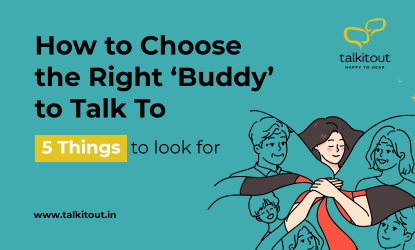
How to Choose the Right ‘Buddy’ to Talk To: 5 Things to Look For
Deciding that you want to talk to someone is a big step. For a long time you may have told yourself you should cope alone, that other people have it worse, or that you do not want to trouble anyone. The moment you start thinking “I wish I had a safe person to talk to” you have already moved towards taking your mental health seriously. The next question usually arrives straight away: who should I talk to, and how do I know they are the right fit for me.
On a platform like Talk It Out, your “Buddy” is not just a random friendly person. They are a trained listener who offers structured emotional support without turning the conversation into a lecture or a gossip session. A good match can make you feel lighter after a chat. A poor match can leave you more confused or shut down than before. That is why it helps to know what to look for before you book or choose someone.
A Buddy is not a replacement for a doctor, a psychiatrist or a formal counselling therapist. Think of them as a bridge between coping alone and entering longer term work with a mental health professional if you ever need that. The aim is to help you feel heard, understood and supported so that you can make clearer choices about your next steps. Here are five qualities that matter when you are choosing the right person to talk to.
1. You feel emotionally safe, not judged or “fixed”
The first and most important sign is how your body feels when you imagine opening up to this person. Do you feel tense and on guard, or a little more at ease. A good Buddy creates a space where you can show the messy version of your thoughts without worrying that they will think you are weak, dramatic or silly. You should be able to say “I do not know why I feel this way” and still feel respected.
Emotional safety comes from the way they respond. They listen more than they speak. They reflect your feelings instead of jumping straight to advice. Over time, this sense of safety can grow into a strong therapeutic relationship. That does not mean they agree with everything you say. It means you trust them enough to explore uncomfortable truths together, even when you feel embarrassed, confused or ashamed.
2. They are trained, clear about their role and know when to refer
Anyone can be kind. Not everyone is trained to hold emotional conversations in a structured way. When you choose a Buddy, check what kind of training they have, what topics they work with and where their limits are. They should be honest that they are not offering medical care or diagnosis. At the same time, they should have enough grounding to recognise when something is beyond their scope.
In those moments a responsible listener might gently encourage you to consider psychologist counselling or to speak to a counseling psychologist or psychiatrist if there are signs of risk, severe distress or long term patterns that need clinical attention. They may also know how Therapy in India is usually structured, what kind of professionals are available, and how Counselling in India can differ between cities, organisations and online platforms.
You do not have to use formal services straight away. Yet it is reassuring to know that the person you are talking to respects professional boundaries and will not try to handle everything alone just to keep you as a client or a contact. A good Buddy is part of your support system, not your entire system.
3. Practical fit: timing, format and money stress
The right person can still be the wrong fit if you can never find a slot that works or if every chat creates financial anxiety. Before you commit, think about your daily routine and capacity. Do you prefer shorter, more frequent conversations or longer ones less often. Are evenings easier than mornings. Does texting feel safer than video at first.
Many people feel more comfortable starting with online support, especially if they live with family, have a packed schedule or feel awkward about being seen going to a clinic. In those cases options like virtual therapy for depression and day to day stress can be useful later on, while a Buddy might be your first step to get used to talking about feelings. Look for services that are transparent about pricing so that you are not doing emotional work while secretly calculating your bank balance. Platforms that aim to offer affordable therapy and low cost listening spaces understand that money stress is already part of many people’s mental load.
When the practical pieces click, you are more likely to show up consistently. Consistency matters more than having a perfect emotional moment every single time.
4. They understand your context and lived reality
You are not just a list of symptoms. You are a person with culture, language, family dynamics, faith, social media habits, study or work pressures and a specific life story. It helps if your Buddy has some familiarity with the kind of world you move in. That does not mean they must share your background exactly. It does mean they should be genuinely curious about it and ready to learn.
For a student, someone who understands student counselling needs can make a big difference. They will not dismiss exam stress, visa worries, hostel or flatmate issues or placement anxiety as “just a phase”. For a working parent, you might want someone who respects the chaos of balancing caregiving and career. For a queer person, you may need someone who does not treat your identity as a debate topic.
Have a look at their profile, interests, languages and areas of focus. If you are unsure, you can even use the first chat to ask direct questions. A good Buddy will not be offended. They know you are trying to see whether you feel safe and understood with them.
5. They support your next steps, whatever those look like
The right Buddy is not invested in keeping you dependent on them. Their job is to help you reconnect with your own voice, your own choices and your own support network. Sometimes that means helping you communicate better with friends or family. Sometimes it means practising boundaries. Sometimes it means exploring what kind of professional help would serve you best.
For some people the next step may be Individual Therapy with a psychologist or counsellor so that they can spend focused time on old patterns, trauma or deep seated beliefs. In other cases it may look like joining virtual therapy for depression programmes later on, or trying a support group when you feel ready. A thoughtful Buddy respects your pace. They do not rush you, but they also do not minimise your pain.
They check in about how the conversations are landing for you. They are open to feedback if something does not feel right. If you tell them you are thinking about trying formal sessions, they cheer you on instead of feeling threatened. They know that your wellbeing matters more than whether you stay with them forever.
A small checklist before you choose
Before you pick a Buddy on any platform, you can ask yourself:
- Do I feel at least a little more relaxed when I imagine talking to this person?
- Do they explain their role clearly, including what they cannot do?
- Would I feel comfortable mentioning words like psychologist counselling or counseling psychologist if I needed more support later?
- Do their timings, format and fees sit well with my real life, considering the need for affordable therapy and flexibility?
- Do I see any signs that they understand my context, such as student counselling experience, cultural awareness or familiarity with how Therapy in India and Counselling in India usually work?
- Do they seem like someone who could help me build a steady therapeutic relationship and who would also encourage Individual Therapy or virtual therapy for depression if that ever became the right step for me?
If you can answer yes to most of these, you are likely close to finding the right person to talk to. You do not have to get it perfect on the first attempt. You are allowed to try a Buddy, notice how you feel and then switch if needed. Listening to that inner sense of safety is part of taking care of yourself.
Choosing a Buddy is really about choosing to stop carrying everything in silence. The right match will not erase your problems overnight, but they will sit with you in them, help you make sense of what you feel and remind you that you are not weak or broken for needing support. You are simply human, and humans are meant to be heard.